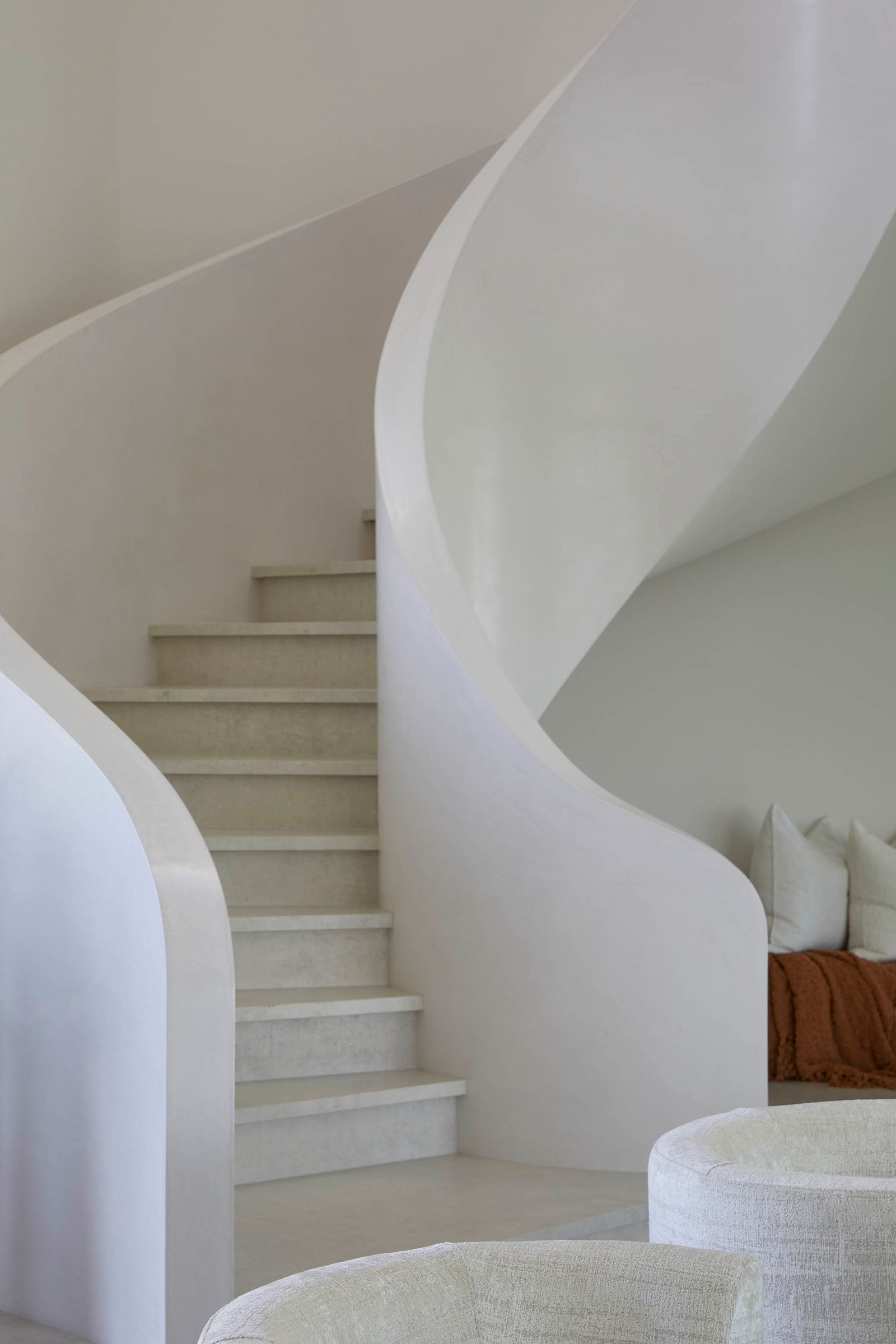
Reference: https://www.architectureanddesign.com.au/project/sylvanian-waters
From the moment we stepped onto the waterfront site in Sylvania Waters, the vision was clear: design a home that feels connected: to place, to water, and to people. Our task was not just to build a house, but to create a functional, beautiful retreat that responded naturally to its surroundings.
The client brief laid out precise goals: a well‑planned site layout, smooth circulation, generous natural light, sustainability strategies, and an end-user experience that balances comfort, privacy, and social connection.
A Thoughtful Plan for Home Life
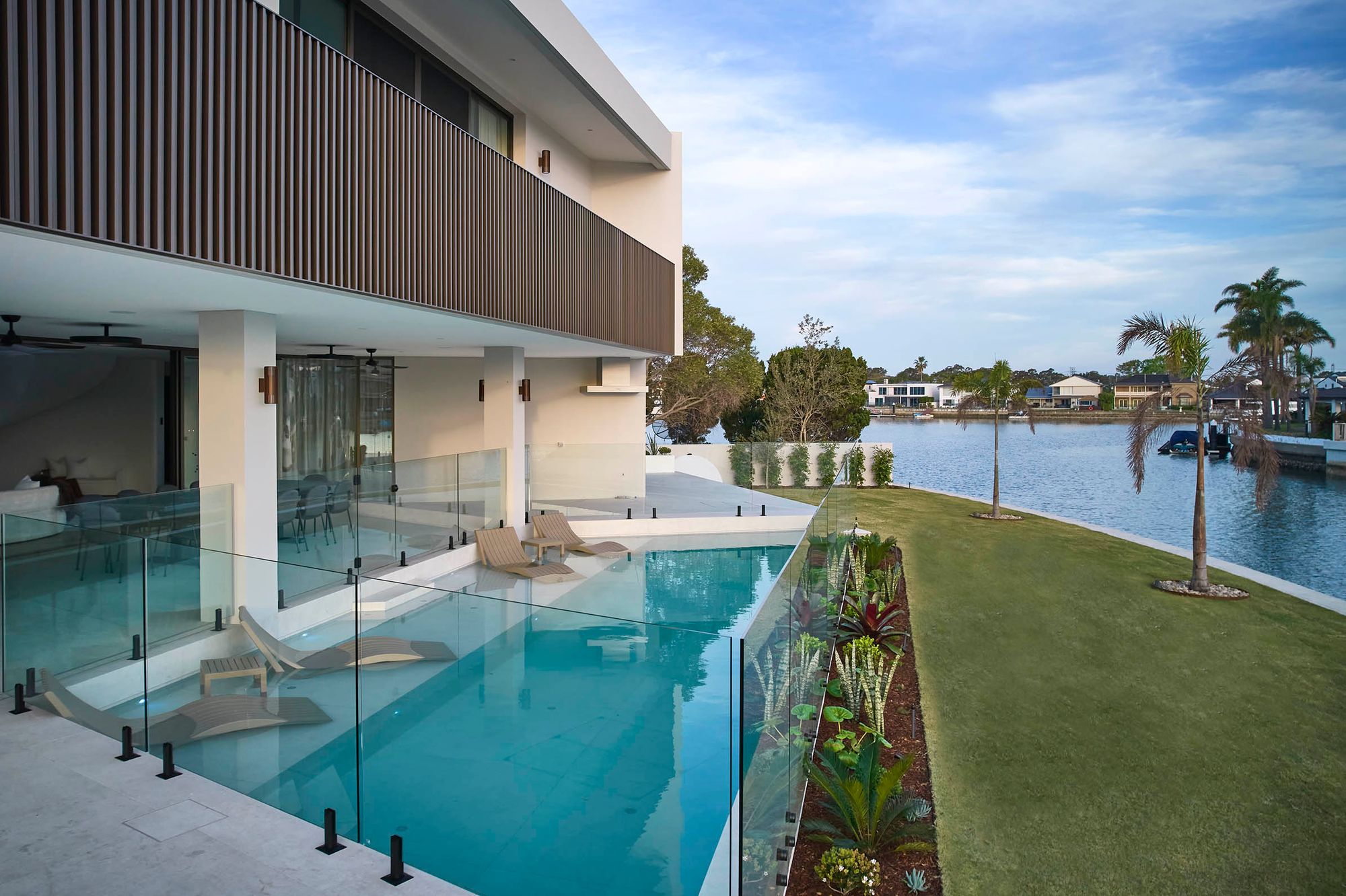
We organised the sleeping quarters on the first floor to provide calm, private retreats, while the ground floor flows as a multi-purpose, open-plan space, perfect for family gatherings, relaxation, or entertaining. This zoning supports both intimate family moments and larger social interactions.
Celebrating a Love of Water
Because the family loves the waterways, we oriented the home to maximise serene views over the canal to their private jetty and moored vessel. Inside, a semi-shaded indoor pool invites year-round swimming: its still, luminous surface reflecting soft dappled light, the gentle scent of warm tile, and a whisper of cool water on skin.
Architecture & Design: The Evolution of the Vision
What was the vision, and how did it evolve?
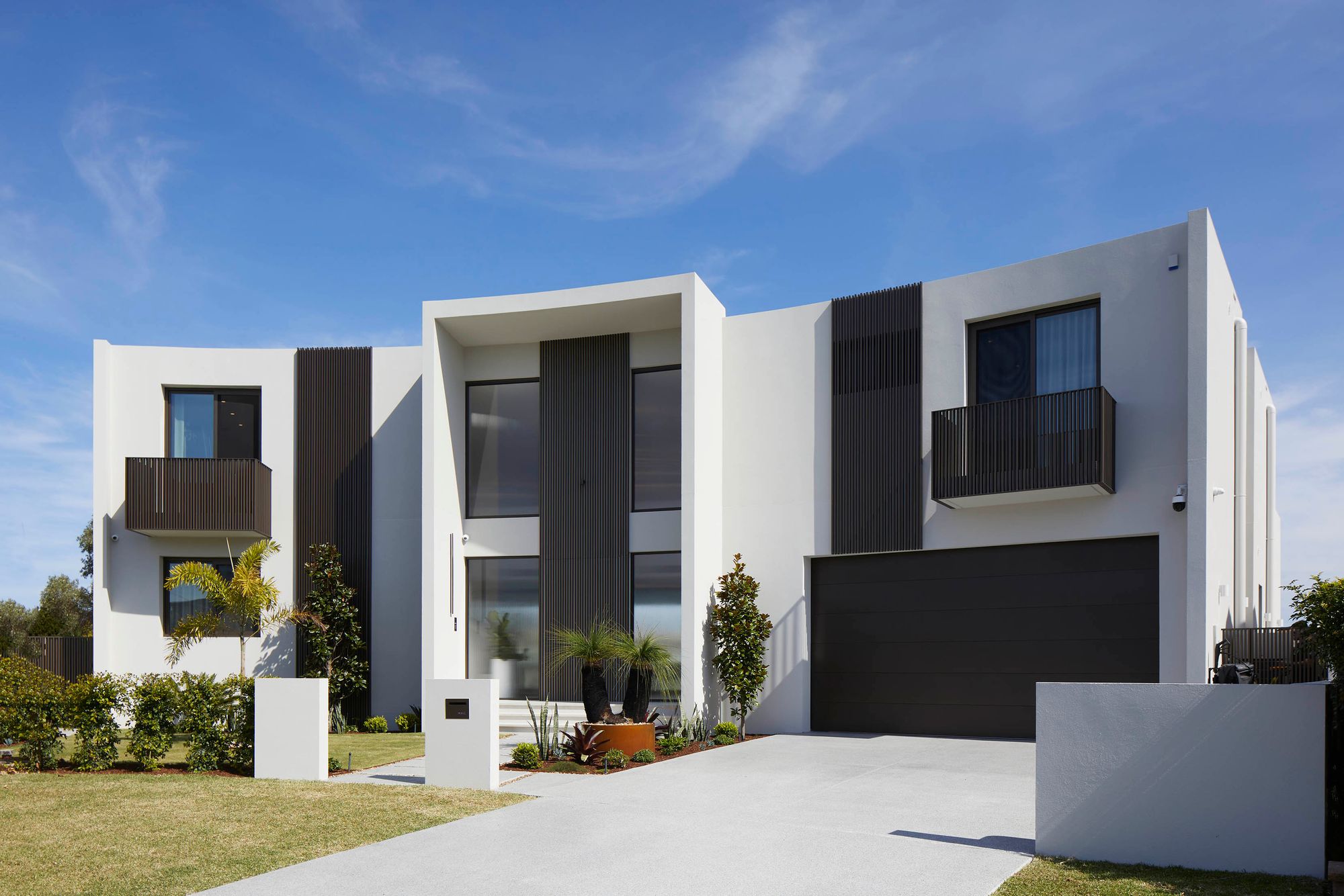
Originally, we aimed to design something rooted and purposeful, not overly ornamental, but deeply considered. Over time, that vision grew richer through close collaboration with the client, our consultants, and regulatory partners. The building’s form became more refined, striking a balance between everyday functionality and expressive, elegant architecture.
Key Challenges & How We Overcame Them
One of the biggest hurdles was the irregular, constrained site, particularly the setback from the canal edge required by local council regulations. Instead of treating that setback as a limitation, we embraced it.
Through thoughtful spatial planning, layered landscaping, and a deep respect for the natural geometry of the land, we turned constraints into creative opportunities. We used a mix of native plantings and sculpted terraces to frame views and dissolve boundaries.
How We Listened & Delivered
It begins with empathy. We spent time understanding what the client cared about, not just their functional needs, but their emotional aspirations for the home. We held frequent design workshops, shared progress transparently, and invited feedback at every stage. This collaborative process ensured that we aligned with their long-term vision, not just for how the home operates, but how it feels.
Innovative Materials & Sustainable Strategies
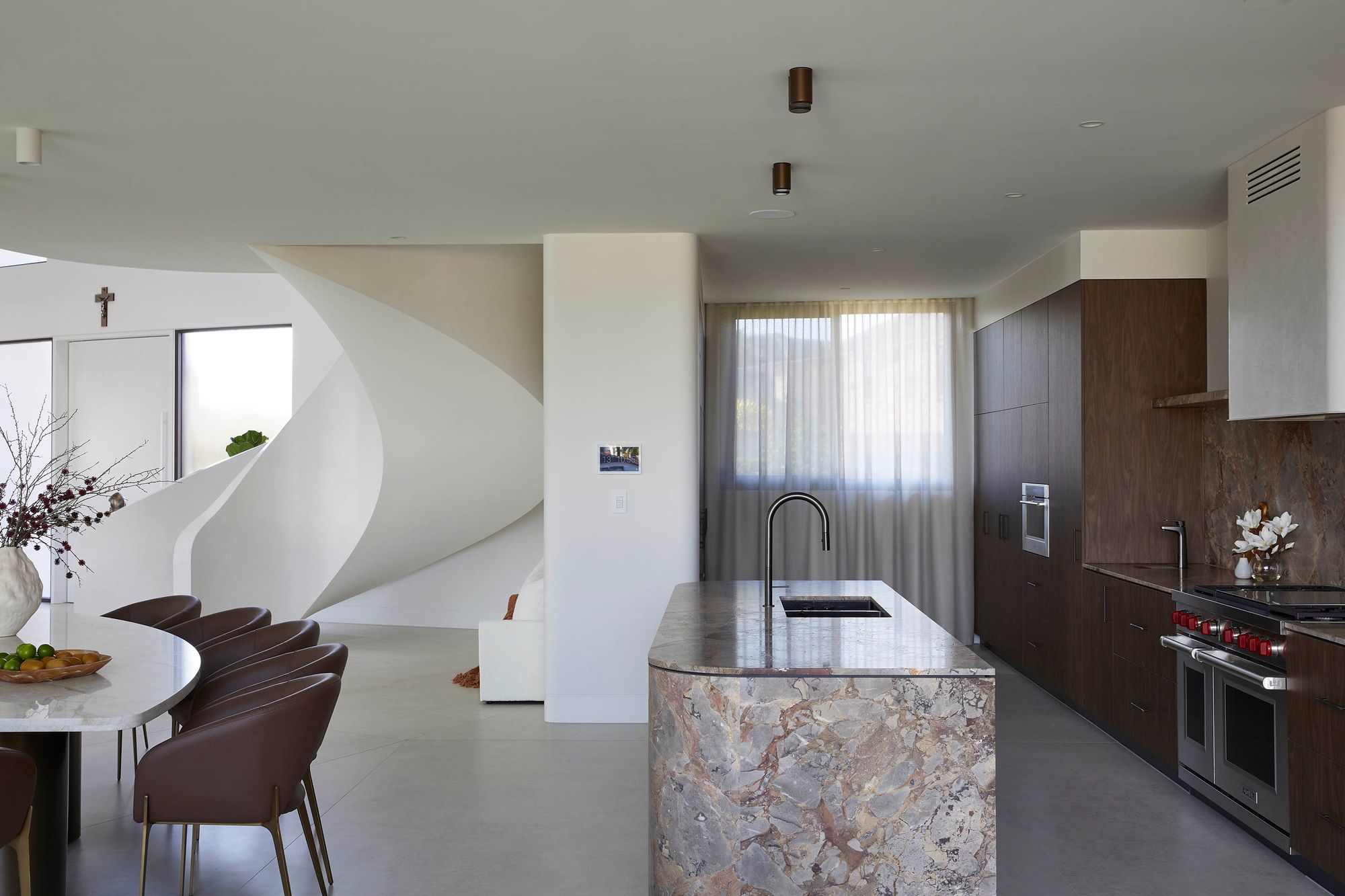
Rather than using flashy, trendy materials, we opted for honesty and restraint. We layered warm, tactile textures, such as natural timber, matte concrete, and glass, to give depth without distraction. To enhance comfort, we integrated passive design principles: cross-ventilation, strategic shading, and a building orientation that captures breezes from the waterways. These strategies support both thermal comfort and energy efficiency.
How It Fits into Our Philosophy
This project truly reflects our design ethos: grounded, human, enduring. We believe architecture should forge strong relationships, between people, place, and time. By turning architectural constraints into creative possibilities, by prioritising simplicity over excess, and by centering the user experience, the home becomes more than a built form. It becomes a space that elevates daily life, nurtures well‑being, and quietly stands the test of time.
For more on how we bring this philosophy to life across our residential projects, take a look at our approach to designing homes that respond meaningfully to their surroundings.
